An evidence-based comparison of Crocodile Products bamboo composite mats against conventional ground protection materials: mechanical properties, environmental footprint, and total cost of ownership.
This page is being populated with verified research data and third-party lab results. Full citations and downloadable spec sheets coming soon.
max growth in a single day
World's fastest-growing plant
INBAR / MDPI Climate 2023
to structural maturity
vs. 50-100+ yrs for tropical hardwood
INBAR Technical Report
more oxygen than equivalent forest
Per hectare vs. equivalent forest area
Guadua Bamboo Research
CO₂ absorbed per hectare/yr
Japanese national research estimate
Japanese Bamboo Society / INBAR
species worldwide
Found on every continent except Antarctica
World Bamboo Organization
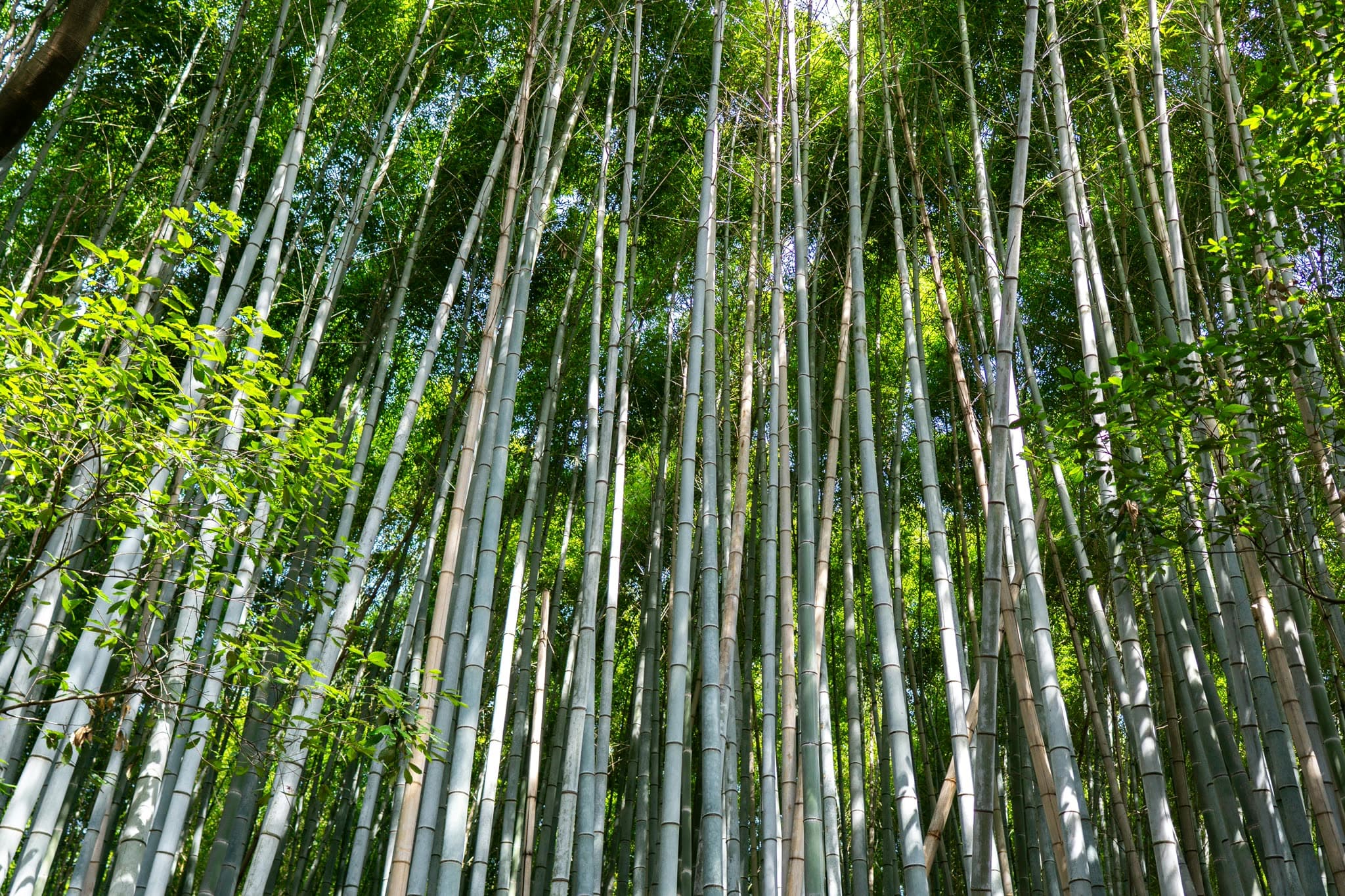
Bamboo is the world's fastest-growing plant, reaching full structural maturity in 2-5 years. Unlike tropical hardwoods that take a century to recover, bamboo regenerates from its root system without replanting.
Crocodile Products' laminated bamboo composite panels are precision-engineered under industrial pressure and heat. The result is a dimensionally stable, high-density product suited to the most demanding construction and energy applications.
A hectare of bamboo sequesters 9-12 metric tonnes of CO₂ per year, outpacing most tree plantations. Combined with a low-energy manufacturing process, Crocodile Products mats achieve a net-negative lifecycle carbon balance.
Field-tested across oil & gas, pipeline, renewable energy, and heavy civil projects. Crocodile Products mats resist rot, UV degradation, and heavy cyclic loading, with documented service lives exceeding 25 years.
Key mechanical values for Crocodile Products bamboo mats are drawn from independent laboratory reports (IBST, SGS, RIFI Vietnam, 2021–2026). Competitor figures reflect published literature ranges and may vary by species and grade.
Cells marked TBD indicate data not yet published for that material.
| Property | Crocodile Products Bamboo | Azobé / Ekki | Steel | HDPE | Fiberglass |
|---|---|---|---|---|---|
| Compressive Strength(MPa) | 87.4 (IBST tested) | 96 (CIRAD TROPIX) | ~250-400 | ~20-30 | ~150-200 |
| Tensile Strength(MPa) | ~140-280 | ~60-100 | ~400-550 | ~20-35 | ~200-350 |
| Density(kg/m³) | ~1,000 (mat, tested) | 1,060 (CIRAD TROPIX) | ~7,850 | ~950 | ~1,800 |
| Strength-to-Weight Ratio((relative)) | Excellent | Good | Fair | Low | Very Good |
| Harvest / Production Cycle | 4–5 years | 60+ year growth cycle | Non-renewable | Petroleum-derived | Synthetic |
| CO₂ Footprint (lifecycle) | Negative | High (IUCN Red List: Vulnerable) | Very High | High | High |
| Weather / UV Resistance | High (treated) | EN 350 Class 1–2 (durable) | Low (corrodes) | Very High | Very High |
| Load Rating (Heavy Equipment)(kN / t) | ~480 kN (~49 t) | Not published | TBD | TBD | TBD |
| Service Life (outdoor, industrial)(years) | 15-25 | 5-15 | 10-20 (treated) | 15-25 | 25-40 |
| End-of-Life / Recyclability | Biodegradable | Biodegradable | Recyclable | Recyclable | Landfill |
Sources: Independent test reports (IBST Vietnam, SGS Vietnam, RIFI Vietnam, 2021–2026); published academic literature; manufacturer spec sheets. Bamboo mat load figure (~49 t / 480 kN) is from full-scale IBST mat testing. All competitor figures are indicative ranges.
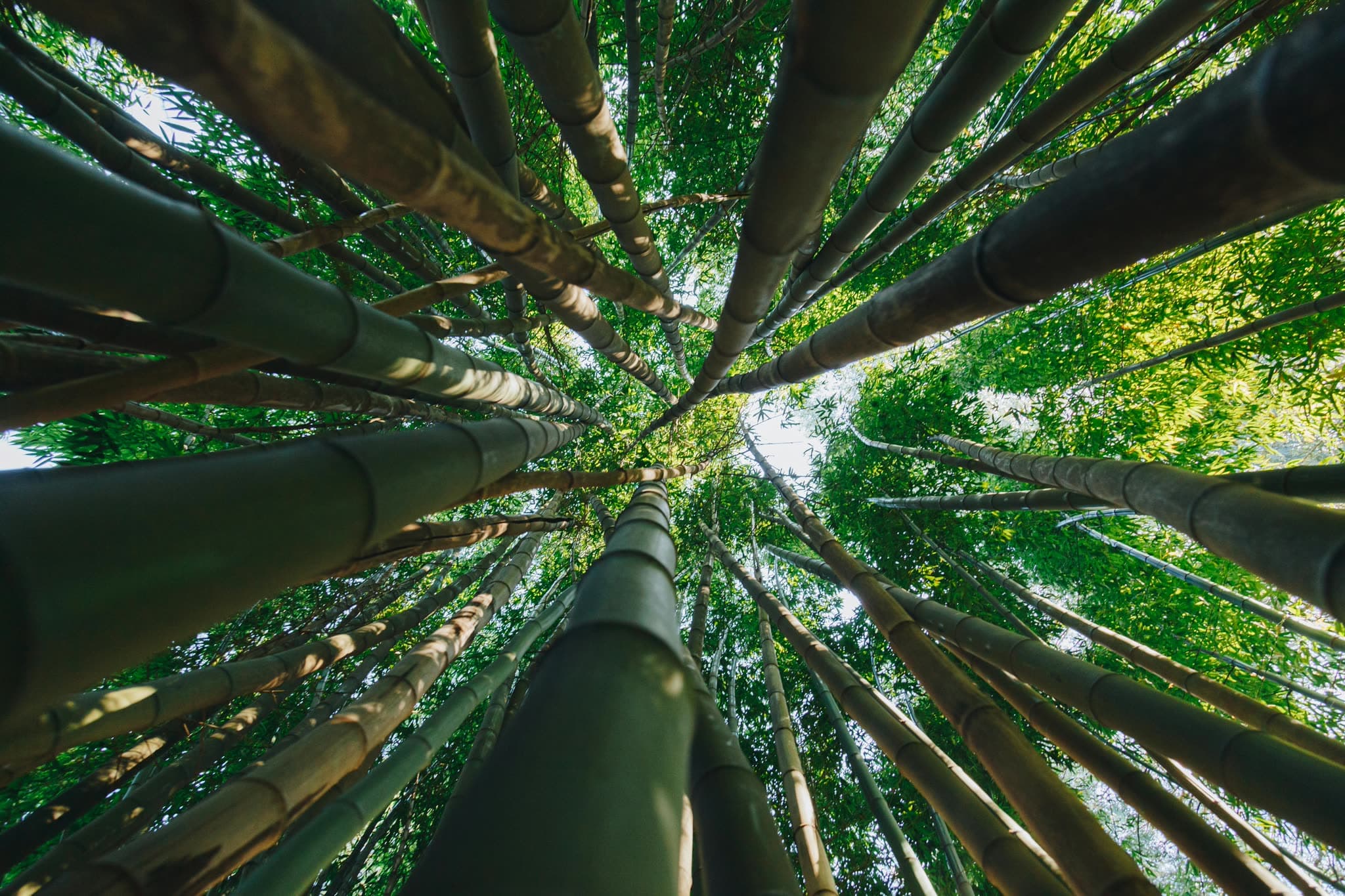
“The bamboo tree spends five years growing its roots underground, showing the world nothing but a tiny sprout. Then, in five weeks, it towers ninety feet tall.”
This is not metaphor. It is biology. The bamboo culm reaches its full height in a matter of weeks because the root and rhizome system has spent years building the infrastructure to support explosive growth. It is also why bamboo mats can carry the same load as hardwood, outlast steel in corrosive environments, and be harvested annually without ever replanting. The foundation was built to last.
Every claim below is sourced from peer-reviewed research or major international bodies. Links provided.
Managed bamboo plantations sequester 9-12 metric tonnes of CO₂ per hectare per year, outpacing most tree plantations. Bamboo also produces phytolith-occluded carbon: a stable carbon form locked into the soil for thousands of years after harvest.
Source: MDPI Climate, 2023; INBAR Carbon Policy Brief, 2020Bamboo's dense fibrous rhizome system holds 200-400 mm of rainfall, reduces surface runoff, stabilizes riverbanks, and prevents soil erosion on steep slopes where other crops cannot grow. It rehabilitates degraded land without chemical inputs.
Source: IFAD Explainer: Five Ways Bamboo Can Fight Climate ChangeBamboo forests support rich biodiversity, providing canopy cover, food, and habitat for hundreds of species. Unlike monoculture timber operations, bamboo is harvested selectively: the root system stays intact, the forest is never clearcut, and the land is never replanted.
Source: Canadian Science Publishing: ER-2025-0032; Frontiers in Ecology 2025Bamboo's tensile strength reaches 140-280 MPa (comparable to mild steel) at a fraction of the density (900-1,100 kg/m³ vs. 7,850 kg/m³). Its strength-to-weight ratio is approximately 3-4× that of structural steel, making it exceptionally efficient for load-bearing applications.
Source: ScienceDirect: Strength Properties of Bamboo; IJSTR Comparative Analysis 2015At end of service life, bamboo composite products return to the biosphere cleanly, unlike steel (energy-intensive recycling) or HDPE/fibreglass (landfill). No toxic off-gassing during manufacture, no microplastic shedding in the field.
Source: INBAR Technical Report on Bamboo ProductsBamboo can be harvested every year once mature, with no replanting required. A single hectare produces a continuous annual yield for decades. This predictable, regenerative supply chain reduces exposure to timber scarcity, deforestation regulations, and commodity price volatility.
Source: World Bamboo Organization; INBARTropical hardwood deforestation contributes an estimated 10% of global CO₂ emissions. Crocodile Products' bamboo supply chain is structured to be carbon-negative from harvest through end of service, validated by independent lifecycle analysis.
Full LCA documentation and third-party certification data will be published here.
more CO₂ sequestered vs. equivalent hardwood forest
CO₂ stored per hectare of bamboo forest (cumulative)
harvest cycle vs. 100+ years for tropical hardwood
carbon footprint across product lifecycle
See how our bamboo composite mats perform on your next project.
